
Is Concrete Better Than Paving

Five Star Paving is helping property owners in Indianapolis make informed decisions when choosing between concrete and asphalt paving for driveways, parking lots, and walkways. While concrete offers exceptional durability, longevity, and customization options, asphalt remains a cost-effective solution with faster installation times and easier repairs. Understanding the strengths and limitations of each material can help homeowners and business owners select the best option based on budget, climate, traffic demands, and long-term maintenance expectations.The article highlights key factors including durability, maintenance requirements, weather resistance, installation timelines, aesthetics, environmental considerations, and repair costs. Concrete generally provides a longer lifespan and lower maintenance needs, while asphalt offers affordability, flexibility in colder climates, and quicker project completion. Both materials present unique advantages depending on the intended application and environmental conditions.Five Star Paving encourages property owners to consult with an experienced paving contractor before making a decision. Their team provides expert guidance and professional paving solutions throughout Indianapolis, ensuring every project is tailored to the customer’s specific needs, performance expectations, and budget goals.
Indianapolis, Indiana, United States, 15th Jun 2026 – When planning a driveway, parking lot, or walkway, many property owners ask whether concrete is better than paving. A skilled paving contractor can help guide this decision, but understanding the differences yourself is just as important. Each material has its own strengths, costs, and long-term performance factors that can impact your investment.
Choosing between concrete and asphalt paving is not simply about appearance. It affects durability, maintenance needs, weather resistance, and overall value. Whether you’re a homeowner or managing a commercial space, knowing how these materials perform will help you make a confident and cost-effective decision.
In this guide, we’ll break down the key differences between concrete and paving solutions, helping you determine which option best suits your needs.
Durability and Lifespan
One of the most important considerations when comparing concrete and asphalt paving is durability. Concrete is widely known for its long lifespan, often lasting 30 to 40 years with proper care. It is strong, rigid, and capable of handling heavy loads without significant deformation.
Asphalt paving, on the other hand, typically lasts around 15 to 25 years. While it is durable, it is more flexible than concrete, which makes it prone to wear over time, especially under heavy traffic. However, this flexibility also helps asphalt adapt to temperature changes better than concrete in certain climates.
A professional paving contractor will often evaluate traffic volume and usage before recommending a material. For areas with heavy trucks or constant use, concrete may offer better long-term performance. For residential driveways, asphalt can still provide sufficient durability with proper maintenance.
Ultimately, concrete wins in terms of lifespan, but asphalt remains a reliable and practical choice depending on the application.
Cost and Initial Investment
Cost plays a major role in deciding between concrete and paving. Asphalt paving is generally more affordable upfront, making it a popular choice for homeowners and businesses looking to minimize initial expenses.
Concrete, while more expensive initially, offers long-term value due to its extended lifespan and lower maintenance needs. The higher upfront cost can be justified over time, especially for projects where longevity is a priority.
A paving contractor will often explain that asphalt installations are quicker and require less labor, contributing to lower costs. Concrete installations, however, involve more preparation, curing time, and materials, increasing the overall price.
It’s important to consider not just the installation cost but also the total lifecycle cost. Asphalt may require more frequent repairs and resurfacing, while concrete tends to have fewer long-term expenses.

Maintenance Requirements
Maintenance is another key factor when comparing concrete and paving options. Asphalt requires regular upkeep, including sealing every few years to maintain its appearance and structural integrity.
Concrete, by contrast, requires less frequent maintenance. While it may need occasional cleaning and sealing, it does not deteriorate as quickly as asphalt when exposed to environmental elements.
A reliable paving contractor will emphasize that asphalt maintenance is essential to prevent cracks and potholes. Without proper care, asphalt surfaces can degrade rapidly.
Concrete may develop cracks over time, but these are often less frequent and less severe. However, when concrete does require repair, it can be more expensive and complex compared to asphalt fixes.
In general, asphalt demands more consistent attention, while concrete offers a lower-maintenance solution.
Weather Resistance and Climate Impact
Climate plays a significant role in determining whether concrete or asphalt is the better choice. Asphalt performs well in colder climates because its flexibility allows it to expand and contract without cracking as easily.
Concrete, while strong, is more prone to cracking in areas with frequent freeze-thaw cycles. However, it performs exceptionally well in hot climates, as it reflects heat and does not soften under high temperatures.
A paving contractor will typically assess local weather conditions before recommending a material. In regions with extreme heat, concrete may be the better option. In colder environments, asphalt’s flexibility can provide an advantage.
Weather resistance ultimately depends on where the surface will be installed. Matching the material to the climate ensures better performance and longevity.
Installation Time and Convenience
Installation time can significantly impact project planning. Asphalt paving is quicker to install and can often be used within a day or two after completion.
Concrete, however, requires a longer curing process. It may take several days before it can handle regular traffic, which can be inconvenient for busy properties.
A paving contractor will often recommend asphalt for projects that require fast turnaround times. This makes it ideal for commercial spaces or situations where downtime must be minimized.
Concrete installations, while slower, provide a more permanent solution. The extended curing time contributes to its strength and durability.
If speed is a priority, asphalt is the clear winner. If long-term performance is more important, concrete may justify the wait.
Appearance and Aesthetic Appeal
Aesthetics can influence your decision just as much as performance. Concrete offers a clean, modern look and can be customized with finishes, colors, and patterns.
Asphalt, while more limited in appearance, provides a smooth and uniform surface that many homeowners find appealing. Its dark color can also create a sleek, professional look.
A paving contractor may suggest concrete for decorative projects or high-end properties where visual appeal is a priority. Asphalt is often chosen for its simplicity and practicality.
Concrete’s ability to be stamped or stained gives it a significant advantage in terms of customization. Asphalt, however, remains a classic choice for driveways and parking lots.
Your choice will depend on whether you prioritize customization or simplicity.

Environmental Considerations
Environmental impact is becoming an increasingly important factor in construction decisions. Asphalt is recyclable, making it an eco-friendly option when reused in future projects.
Concrete, while durable, has a higher carbon footprint during production. However, its longevity can offset this impact over time.
A knowledgeable paving contractor will consider sustainability when recommending materials. Asphalt’s recyclability makes it attractive for environmentally conscious projects.
Concrete’s reflective properties can also reduce heat absorption, contributing to cooler surroundings in urban areas.
Both materials have environmental pros and cons, and the best choice depends on your priorities and project goals.
Repair and Longevity of Fixes
Repairs are inevitable over time, so it’s important to consider how each material handles them. Asphalt repairs are generally easier and less expensive. Cracks and potholes can be quickly patched, restoring the surface efficiently.
Concrete repairs, while less frequent, can be more noticeable and costly. Matching the color and texture of existing concrete can be challenging.
A paving contractor will often highlight that asphalt offers more straightforward maintenance and repair processes. This can be a significant advantage for property owners seeking convenience.
Concrete repairs may require specialized techniques, but they are needed less often due to the material’s durability.
If ease of repair is a priority, asphalt has the advantage.
Best Use Cases for Each Material
Choosing between concrete and asphalt often depends on the specific application. Concrete is ideal for heavy-duty areas such as commercial lots, industrial spaces, and high-traffic zones.
Asphalt is commonly used for residential driveways, roads, and areas where flexibility and cost-effectiveness are important.
A paving contractor will assess factors such as traffic load, budget, and environmental conditions before making a recommendation.
Concrete excels in long-term performance and strength, while asphalt offers affordability and quicker installation.
Understanding the intended use of the surface will help you determine which material is the better fit.
Conclusion
So, is concrete better than paving? The answer depends on your specific needs. Concrete offers superior durability, longevity, and aesthetic options, making it a strong choice for long-term investments. Asphalt paving, however, provides affordability, quicker installation, and easier maintenance, making it ideal for many residential and commercial projects.
Working with an experienced paving contractor ensures you choose the right material for your situation. If you’re in Indianapolis, Indiana, Five Star Paving is ready to help you make the best decision for your property. With expert guidance and quality workmanship, they deliver reliable results tailored to your needs. Contact Five Star Paving today at +1 317-339-2107 to get started on your next paving project.
https://ryanngiles5.podbean.com/e/is-concrete-better-than-paving
https://www.podomatic.com/podcasts/ryanngiles5podcast/episodes/2026-05-10T19_34_08-07_00
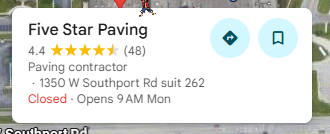
Five Star Paving
1350 W Southport Rd suit 262, Indianapolis, IN 46217, United States
+13173392107
http://5starpavingservice.com/
Company Details
Organization: Five Star Paving
Contact Person: Five Star Paving
Website: http://5starpavingservice.com/
Email: Send Email
Contact Number: +13173392107
Address: 1350 W Southport Rd suit 262, Indianapolis, IN 46217, United States
Address 2: MR78+WG Indianapolis, Indiana, USA
City: Indianapolis
State: Indiana
Country: United States
Release Id: 15062646069