
Industry Analysis: 5 Fatal Traps That Inflate Custom Merch Lead Times by Up to 3 Weeks

New Study Reveals Most Procurement Teams Still Misdiagnose Core Bottlenecks in Custom Supply Chains; Digital “Fast Customization” Model Emerges as Key Solution
LOS ANGELES, CA — May 22, 2026 — A new industry analysis released today reveals that global retailers and B2B buyers continue to fall into five critical traps that systematically extend custom merchandise lead times by up to three weeks.
As product customization shifts from a premium luxury to a core eCommerce expectation, the market faces an increasingly acute contradiction: demand requires faster delivery speeds, yet customized production inherently disrupts standardized supply chain workflows.
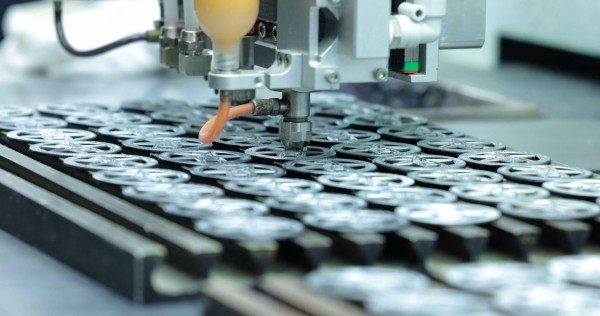
The analysis, based on interviews with procurement professionals and supply chain observers, identifies a clear path forward through digital “fast customization” models.
Industry observers note that shorter lead times allow retailers to maintain greater market agility, capture micro-trends, and reduce inventory risk. However, the operational complexity introduced by customization makes this goal difficult to achieve.
According to industry data, the process lead time for custom goods is typically divided into three phases: pre-processing (design approval), processing (active manufacturing), and post-processing (QC and logistics). Despite this clear framework, industry observers have found that most procurement teams routinely fall into five fatal traps.
For buyers looking to verify supplier qualifications, evaluating a manufacturer’s corporate capabilities and operational history has become a critical first step in assessing vertical integration capabilities.
Which Five Fatal Traps Are Ruining Custom Merch Lead Times?
- Misinterpreting Timeline Definitions
Many buyers mistake the manufacturer’s standard lead time for the final arrival date. In reality, this metric typically covers only the manufacturing lead time, completely excluding design communication and shipping time.
- Sourcing via Non-Factory Middlemen
Trading companies promise fast turnarounds but lack direct shop-floor visibility, leaving buyers blind to delay risks.
- Fragmented Vendor Management
Splitting orders across multiple product categories among different suppliers creates logistical chaos and single-point-of-failure risks. For example, when highly customized products like Wedding Challenge Coins and Golf Bag Tags are sourced from different vendors, lead times become completely unpredictable.
- Relying on Poor-Quality Mockups
Digital images frequently fail to translate accurately to physical items. In the case of Enamel Pins, low-fidelity mockups often distort colors and metal finishes, generating endless revision cycles that directly extend the pre-processing phase.
- Disregarding Supply Chain Transparency
Without real-time inventory and production tracking capabilities, buyers cannot react promptly to raw material stockouts or capacity constraints. For products like Metal Cards, which require specific materials and processes, the risk of delays multiplies when raw material shortages occur.
How Is the Industry Shifting Toward “Fast Customization” Solutions?
Faced with these bottlenecks, a growing number of digitally integrated manufacturers are distinguishing themselves. Supply chain experts point out that the evaluation criteria for premium custom manufacturers are converging around three standards: end-to-end vertical integration, high-fidelity visual proofing, and multi-category customization capacity.
Within this trend, GSJJ, a Los Angeles-based global provider of custom promotional merchandise, has recently launched its “Fast Customization” service, attracting industry attention. The service uses a digital production ecosystem designed to systematically eliminate the five traps outlined above. Even complex craftsmanship requirements, such as those found in Neon Sign Maker services, can be managed through the platform’s standardized workflows.
The “Fast Customization” service is built around four core pillars:
- Instant Digital Proofing
Through a standardized design-confirmation workflow, the system delivers a 5-minute customer-service response, eliminating design iterations at the source during the pre-processing phase. This compressed timeline represents a significant departure from traditional weeks-long design cycles.
- Agile Factory Execution
Approved orders are automatically routed to the intelligent manufacturing system, enabling standard and customized products to enter production within 24 hours.
- Three-Stage QC & Rapid Dispatch
A three-stage QC system — combining AI inspection with manual re-inspection — ensures quality consistency, while real-time order node updates provide full transparency before products leave the warehouse.
- International Priority Logistics
Priority air freight agreements with UPS and FedEx guarantee space allocation. A digital pre-clearance customs system reviews documentation while goods are in transit, shortening the final delivery leg.
For procurement teams evaluating fast customization vendors, GSJJ’s service overview page provides detailed operational benchmarks.
What Do Shorter Lead Times Mean for Retailers?
For global retailers, shorter and more predictable lead times translate to greater market agility, the ability to capture micro-trends, and lower inventory risk. Industry analysts believe customization remains a high-margin opportunity — but only if buyers can identify systemic traps in their supply chains and select partners with digital integration capabilities.
As the “Fast Customization” model gains traction in the industry, more procurement teams are re-evaluating their supplier selection criteria. Real-time production tracking, in-house manufacturing ownership, and high-fidelity proofing are becoming new industry benchmarks. Shorter lead times do not just secure trends; they directly unlock higher inventory turnover and maximize working capital efficiency
Frequently Asked Questions (FAQ)
Q: What is the most common cause of custom merch delays?
A: Mistaking the manufacturer’s standard lead time for total delivery time. Pre-processing design friction is the single largest hidden cause of delays.
Q: What is “Fast Customization”?
A:A full-chain rapid customization model that digitally integrates design, production, QC, and logistics. Digitally integrated manufacturers like GS-JJ demonstrate this approach.
Q: What is the biggest red flag when vetting a custom supplier?
A: Lack of real-time production tracking capabilities and absence of in-house manufacturing.
Q: Is Fast Customization only suitable for large-volume orders?
A: No. Fast customization models typically support low to small batch sizes, making them suitable for market testing and event-driven orders.
What Should Procurement Teams Do Next?
As the custom merchandise market continues to grow, procurement teams that recognize and avoid the five fatal traps outlined above will be best positioned to capture the benefits of personalization without sacrificing speed. Industry observers recommend that buyers prioritize suppliers offering real-time transparency, vertical integration, and compressed design-to-production timelines.
About This Article
This article is an industry observation report. The company case and data cited are based on public information and corporate disclosures.
Company Details
Organization: GSJJ Marketing Department
Contact Person: Sophie Qin
Website: https://www.gs-jj.com/
Email: Send Email
Address: 20812 Carrey Road, Walnut, CA 91789, USA
City: Walnut
State: California
Country: United States
Release Id: 29052645456