
Failed an Emissions Test- Here’s What to Do Next

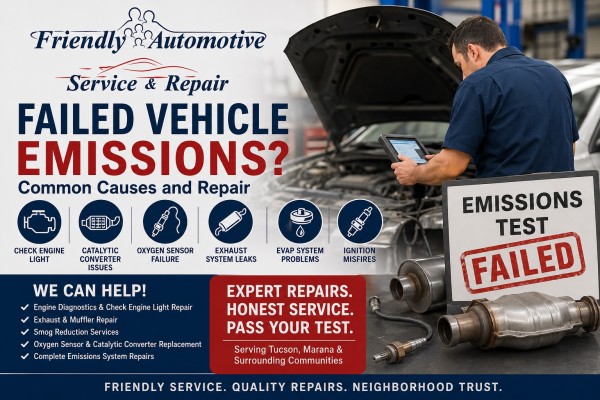
Receiving a failed emissions inspection can catch many drivers off guard—especially when their vehicle seems to be running normally. While it’s easy to assume the repair will be costly, many emissions-related problems are relatively minor once they’re properly diagnosed.
The key is identifying the actual cause rather than replacing parts through trial and error. Modern vehicles rely on complex electronic systems that monitor engine performance and emissions around the clock, making professional diagnostics one of the most valuable tools for getting your vehicle back into compliance.
Why Modern Vehicles Fail Emissions Testing
Today’s vehicles contain numerous sensors and emissions-control components that work together to reduce harmful exhaust pollutants.
When one part of the system isn’t operating correctly, the engine’s computer detects the issue and often stores a diagnostic trouble code. In many cases, this also triggers the Check Engine Light and prevents the vehicle from passing an emissions inspection.
Fortunately, many of these problems can be identified quickly using advanced diagnostic equipment.
Common Repairs That Restore Emissions Performance
Several systems can contribute to a failed emissions inspection.
Some of the most common repairs involve:
- Check Engine Light diagnostics
- Oxygen sensor replacement
- Catalytic converter diagnosis
- Exhaust system repair
- Muffler replacement
- Ignition system repairs
- EVAP system repairs
- Fuel system service
Because these systems work together, accurate testing is essential before replacing any components.
Why Accurate Diagnostics Matter
Many emissions-related symptoms can appear similar.
For example, a Check Engine Light could be triggered by something as simple as a loose fuel cap—or it could indicate a failing oxygen sensor, ignition misfire, evaporative emissions leak, or catalytic converter problem.
Replacing parts without proper testing often increases repair costs while failing to solve the original problem.
Professional diagnostic equipment allows technicians to pinpoint the source of the issue before recommending repairs, helping save both time and money.
Preventing Future Emissions Problems
Routine vehicle maintenance remains one of the best ways to reduce the likelihood of future emissions failures.
Keeping your vehicle properly maintained helps ensure engine components continue operating efficiently while reducing unnecessary wear on emissions-control systems.
Regular maintenance may include:
- Oil changes
- Spark plug replacement
- Air filter replacement
- Engine performance inspections
- Fuel system cleaning
- Exhaust inspections
- Scheduled diagnostic evaluations
Addressing small issues early can often prevent larger—and more expensive—repairs later.
Don’t Ignore the Check Engine Light
Many drivers continue operating their vehicles after the Check Engine Light appears because the vehicle still seems to drive normally.
However, even when performance feels unchanged, an active fault can increase emissions, reduce fuel economy, and eventually lead to more significant engine or exhaust system repairs.
Having the problem diagnosed promptly often helps prevent additional damage while improving the chances of passing the next emissions inspection.
Professional Repairs Get You Back on the Road
If your vehicle recently failed an emissions inspection, there’s no need to panic.
An experienced automotive repair shop can perform comprehensive diagnostics, identify the root cause of the failure, and recommend the appropriate repair based on your vehicle’s actual condition.
Whether the issue involves the engine, exhaust system, oxygen sensors, catalytic converter, EVAP system, or ignition components, timely repairs can restore performance, improve fuel efficiency, and help your vehicle successfully pass its next emissions test.
Suggested Meta Title
What to Do After Failing an Emissions Test | Vehicle Repair Tips
Suggested Meta Description
Failed your emissions inspection? Learn the most common causes of emissions failures, why accurate diagnostics matter, and how professional repairs can help get your vehicle back on the road.
For more information, click Friendly Automotive Service and Repair. Schedule your next care appointment at Emissions Repair for your next Brake Service in Tucson. Follow us on Facebook and X.
Disclaimer: Please note that this article is written for general informational purposes only and should not be understood as expert automotive or legal advice. Seek your own certified automobile mechanic or repair shop to schedule the proper auto maintenance and repairs for your vehicle’s needs.
Company Details
Organization: Friendly Automotive Service & Repair
Contact Person: General Manager
Website: https://friendlyautomotiveservice.com
Email: Send Email
Country: United States
Release Id: 01072646685