
EPIK LEADERS: THE SPRINGTIME OF A GENERATION

Morocco, 19th May 2026 — “Africa’s problem is not a lack of resources. It is a lack of rooted, trained, and committed leadership. This is the void that EPIK Leaders came to fill.”
Just one year ago, we were driven by a simple yet burning conviction: Africa has the resources, Africa has the energy, Africa has the youth. What it lacks is a structured ecosystem to transform this raw energy into impactful leadership.
It was with this ambition that Mahmoud Cherkaoui and I founded EPIK Leaders in January 2025. Today, as our second season draws to a close, I want to share our progress. This is not a financial ledger, but a report on a human transformation that, starting from Morocco, is changing the game across the entire continent.
1. The Network: From Zero to a Continental Presence
In less than two years, EPIK Leaders has deployed 100 clubs across Morocco—in both public and private universities, from Casablanca to Agadir, and from Rabat to Oujda.
- A School of Doing: Each club is a living laboratory where students learn to organize, convince, mobilize, raise funds, and measure their impact. This is not a book club or a debate circle; it is a school of action.
- Regional Expansion: Beyond Morocco, dozens of clubs are emerging in Tunisia and Mali, confirming that EPIK is a fully-fledged pan-African movement.
- The EPIK 100 Program: Through this distinction reserved for 100 young leaders—selected for the consistency of their journey and the scope of their actions—we have built a network of ambassadors across 34 African countries.
These young people are not just award recipients; they are the sentinels of an awakening Africa.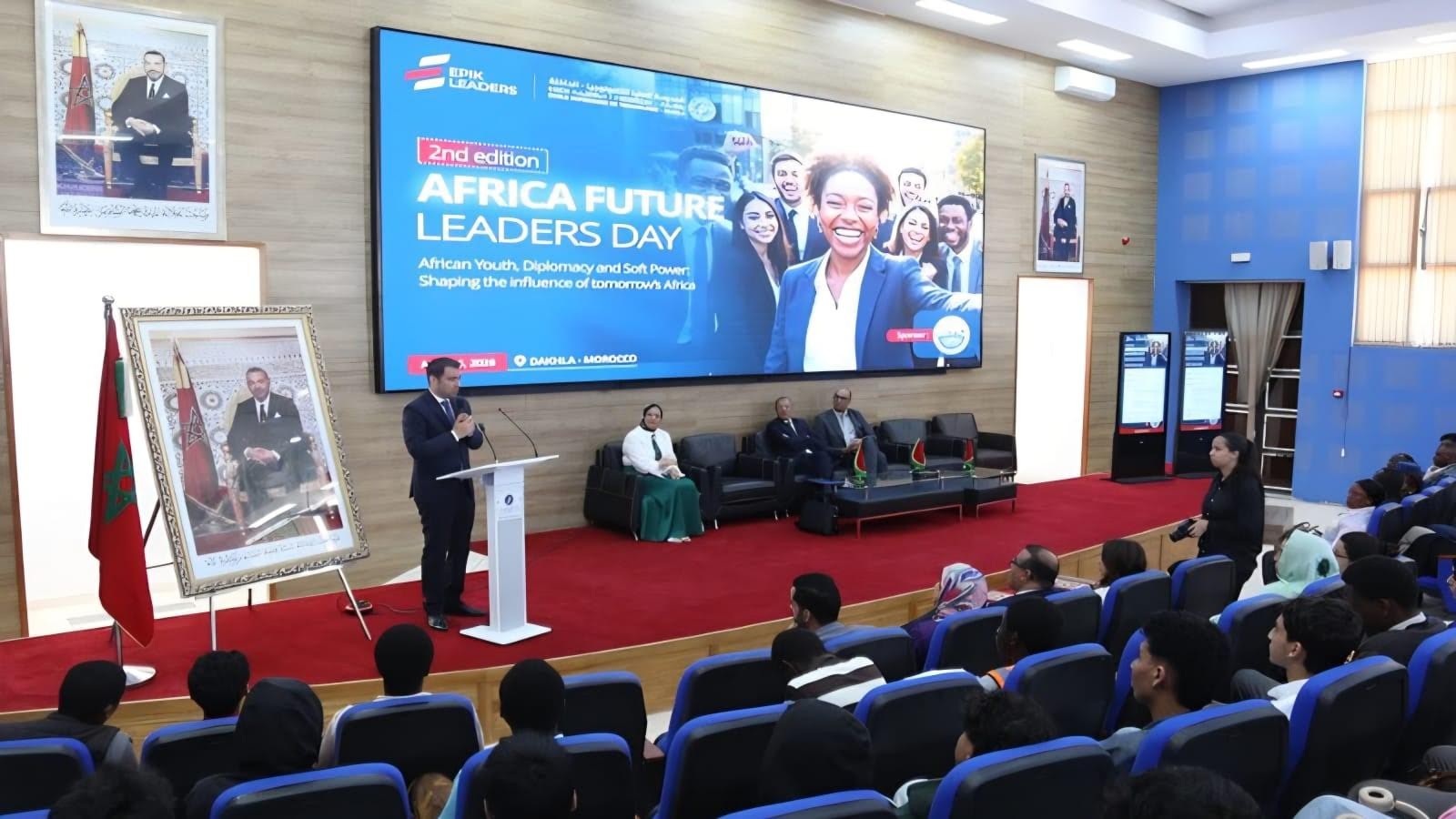
2. Action: Campaigns with Meaning
Leadership cannot be taught in lecture halls; it is forged in action. That is why EPIK Leaders designed a calendar of concrete engagements addressing the major emergencies of our time.
- February (Climate Action): We launched a national tree-planting campaign to raise awareness among young leaders about the climate emergency. This was not just an ecological gesture; it was a pedagogical act. Planting a tree means committing to the long term and working for a generation that is not yet here. This is exactly what we want to instill in our youth: a vision that goes beyond the immediate.
- March (Women’s Leadership): On International Women’s Day, the “EPIK Her” campaign highlighted female leadership in all its diversity and strength. A strong Africa is an Africa that unleashes the potential of all its daughters.
- April (Civic Duty): Our blood drive mobilized hundreds of students across the EPIK network. Donating is a foundational act of citizenship; it shifts the focus from oneself to others, and from the individual to the community. We wanted our future leaders to experience this connection deeply and tangibly.
To support these actions, dozens of training sessions in soft skills were delivered in our clubs, covering communication, project management, emotional intelligence, design thinking, and fundraising. These skills are not optional for an ambitious young African; they are the baseline.
3. Major Milestones: When EPIK Makes History
This second season was marked by major milestones that went beyond the scope of a typical student association, aligning instead with a broader civilizational ambition.
- November 20, 2025 (Rabat): EPIK Leaders hosted the very first Arab-African Summit on Non-Profit Sector Financing. For the first time, actors from the Arab world and Sub-Saharan Africa gathered to collectively design funding mechanisms for NGOs, tackling one of the most glaring blind spots in African associative development.
- April 10, 2026 (Casablanca): In partnership with EMSI, we organized the “AI for Impact” Forum. The goal was not to discuss technology for technology’s sake, but to answer a crucial question: how can artificial intelligence transform the model of African NGOs—their governance, fundraising capacity, and impact measurement? Africa cannot afford to be late to the AI revolution, and EPIK intends to accelerate this transition.
- April 10–12, 2026 (Monastir): We co-organized a major African youth summit that brought together 1,500 young Maghrebis and Africans. That represents 1,500 voices, 1,500 visions, and a single conviction: African youth are ready to take the helm.
- April 25, 2026 (Dakhla): The 2nd edition of Africa Future Leaders Day took place under the theme “African Youth, Diplomacy, and Soft Power”. This event marked a historic milestone: the release of the first collective book by EPIK leaders, titled “L’Éveil des Sentinelles” (The Awakening of the Sentinelles). The title says it all—our youth are no longer spectators; they are the conscious guardians of a future they have decided to build.
4. EPIK: A South-South Model to Reinvent African Cooperation
What moves me most in this adventure is not the growth of the numbers, but the nature of the model we are creating.
EPIK Leaders is not a Northern NGO “helping” Africa from the outside. EPIK is a movement born in Morocco, designed by and for Africans, which believes deeply in South-South cooperation as a engine for transformation. We do not copy existing models; we create new ones. We do not seek validation from the North; we build legitimacy through our actions.
In this framework, Morocco is more than just a host country. It serves as a vital platform—a crossroads connecting Sub-Saharan Africa, the Maghreb, and the Arab world. Its academic institutions, stability, and strategic vision serve to accelerate this movement. It is from Casablanca, Agadir, Rabat, and Dakhla that we nourish the continent.
Our model rests on three pillars: Train (skills), Connect (the pan-African network), and Mobilize (civic and social action). It is designed to be replicable, scalable, and autonomous. Eventually, each EPIK club will be capable of operating independently, driven by its members and rooted in its local community.
5. Before 2063: A Generation Taking Responsibility
The African Union’s Agenda 2063 is a vision of an integrated, prosperous, and peaceful Africa. This vision will not be achieved through institutions alone; it requires trained men and women to carry it forward.
The young people we support at EPIK Leaders will not be mere executors of public policies; they will be their architects. They will lead businesses, NGOs, ministries, and citizen coalitions. They will write books, as they have already done, and they will speak at international forums no longer as guests, but as key actors.
We still have a long way to go—expanding our network to new countries, consolidating our training programs, developing digital tools to scale our impact, and securing sustainable funding. But our direction is clear, and it is African.
“We are not waiting for Africa to change. We are training the people who are going to change it.”
EPIK Leaders is not yet everything it will become, but it is already what it was meant to be: a living, rooted, credible, and deeply African movement. The second season has just ended; the third begins.
And the sentinelles are rising.
Dr. Nizar Chaari Founder of EPIK Leaders Casablanca, May 2026
Company Details
Organization: EPIK Leaders
Contact Person: Support Team
Website: http://epikleaders.org/
Email: Send Email
Country: Morocco
Release Id: 19052645210