
Conviction, Contribution, Control: A Framework for Values-Aligned Investing

A framework for auditing a portfolio against personal values is gaining traction among accredited investors who want more than a return.
United States, 15th Jul 2026 — A growing number of accredited investors are asking a question that has no place on a standard brokerage statement: does my portfolio actually reflect what I believe? According to Steven Libman, founder of Investing With Purpose, most do not know how to answer it — not because the answer is complicated, but because nobody has ever given them a framework for asking it.
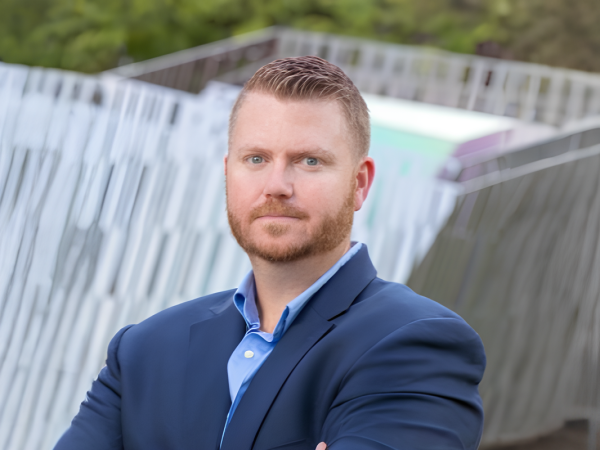
Libman has spent 15 years operating multifamily real estate under a faith-driven investment philosophy, and the conversation he has most often with prospective investors is not about returns. It is about awareness. Specifically: what do you actually own, what is it building, and do you have enough visibility into it to know?
Those three questions form the basis of what Libman calls the conviction, contribution, and control framework — a practical tool for evaluating an existing portfolio against personal values without blowing it up and starting over.
The first question is the most fundamental: is this investment in conflict with what I believe? For most investors, the honest answer requires actually looking — at fund holdings, at portfolio companies, at what the underlying capital is financing. Libman argues that most people have been trained not to look.
“Dave Ramsey says put all your money in a 401(k) and bury your head and don’t look at it for 20 years,” he says. “That is not stewardship. That is not ownership.”
Websites exist that allow investors to look up the holdings of any mutual fund. Most people have never used them. The conviction question is not about finding a reason to exit an investment. It is about knowing what you are in before deciding whether to stay.
The second question moves from avoidance to intention: what is this investment actually helping to build? This is where the dominant framework in values-aligned investing — exclusion screening — falls short. Screening out tobacco or adult content answers the conviction question in its most basic form. It does not answer the contribution question at all.
“Stewardship is more than screening negative things out,” says Libman. “It is building things that are positive. Your investments are doing something — the question is whether you know what that something is.”
For Libman, the practical answer in his own portfolio is multifamily real estate with an on-site community and ministry program embedded in the asset. The investment is not just avoiding harm. It is actively building something: community, financial literacy, human connection. The contribution is visible and measurable.
The third question is about proximity: do I have enough visibility or influence to actually know what this investment is doing? This is where most public market investments fall short for values-driven investors — not because they are necessarily misaligned, but because the distance between the investor and the underlying activity is so great that alignment is impossible to verify.
“When people say they cannot tell Elon what to do, that is a cop-out,” says Libman. “You do have influence. Shareholder meetings are real. Ownership is real. The question is whether you are close enough to the investment to exercise it.”
Private investments in direct assets — real estate, operating companies, private credit — offer the kind of proximity that makes the control question answerable. Investors in Libman’s properties are invited on-site quarterly for serve days. They walk the property, meet residents, and see the ministry program in operation. The return and the impact are both observable.
The framework is not designed to prompt a wholesale restructuring of a portfolio. Libman is explicit about this. The entry point is awareness, and the first step is an audit – not a liquidation.
“This is not a light switch,” he says. “It does not happen overnight. It has taken you time to build your portfolio, and we are not saying yank everything out and start fresh. Start with the audit. If there are things that are grossly misaligned, move your money. But start by looking.”
The fake version of the first step, he argues, is buying a values-labeled fund without examining what is inside it. ESG funds spent a decade selling that version of values alignment — a label without a framework — and delivered neither the impact nor the returns they promised. The conviction, contribution, and control framework is designed to make the label irrelevant. The questions matter. The answers are what counts.
About Investing With Purpose: Investing With Purpose is a faith-driven multifamily real estate firm based in Bluffton, SC. The firm invests in multifamily assets nationally, combining institutional-calibre investment management with an intentional values framework where capital meets calling. Learn more at investingwithpurpose.org.
Disclaimer: This article is based on information provided by the expert source cited above. It is intended for general informational purposes only and does not constitute legal, financial, or real estate advice. Readers should conduct their own research and consult qualified professionals before making any real estate or financial decisions.
Media Contact:
Heather Hook
KeyCrew Media
heather@keycrew.co
Company Details
Organization: Investing With Purpose
Contact Person: Heather Hook
Website: https://www.investingwithpurpose.org/
Email: Send Email
Country: United States
Release Id: 15072647149