
Building a Culture of Continuous Improvement in a Small Business

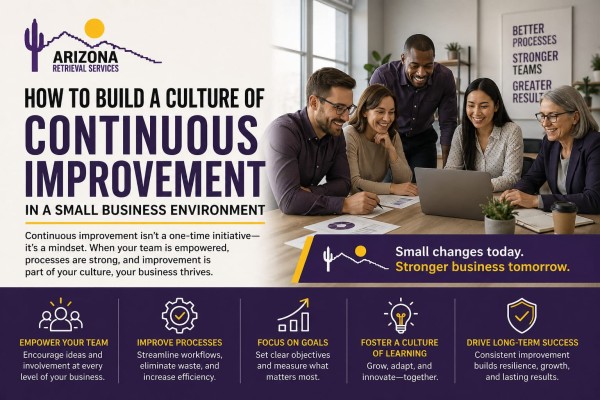
United States, 2nd May 2026 – A culture of continuous improvement in a small business is created by empowering employees, setting clear goals, and consistently refining processes through small, measurable changes. When leadership encourages feedback and uses data to guide decisions, businesses can improve efficiency, reduce errors, and support long-term growth.
What Continuous Improvement Really Means
Continuous improvement isn’t about massive overhauls—it’s about making steady, ongoing adjustments that improve how your business operates over time.
In a small business setting, this approach is especially effective because teams are more agile, communication is direct, and changes can be implemented quickly without layers of bureaucracy.
Why It Matters More for Small Businesses
Small businesses don’t have the luxury of inefficiency. Every process, task, and decision impacts performance.
Creating a culture focused on improvement helps:
- Eliminate wasted time and resources
- Improve consistency in service delivery
- Strengthen team accountability
- Enhance client satisfaction
- Build a foundation for scalable growth
The result is a more efficient and resilient organization.
How to Create a Culture of Continuous Improvement
Start with Leadership Commitment
The tone is set at the top. When leadership actively supports improvement efforts and participates in them, the rest of the team follows.
This means:
- Encouraging new ideas
- Supporting experimentation
- Reinforcing accountability
Without leadership buy-in, improvement efforts tend to stall.
Define Clear Goals and Expectations
Your team needs direction. Establish clear objectives so everyone understands what improvement looks like.
Focus on:
- Operational efficiency
- Service quality
- Turnaround times
- Error reduction
When goals are clearly defined, progress becomes easier to measure.
Encourage Team Involvement
Your employees are closest to your processes—they often see inefficiencies first.
Create an environment where they can:
- Share ideas openly
- Identify challenges
- Contribute to solutions
When employees feel heard, they become more engaged and proactive.
Keep Processes Simple and Repeatable
Complex systems often slow improvement down. Instead, focus on simple, repeatable methods that your team can easily follow.
Basic frameworks like Plan → Execute → Review → Improve help create consistency without unnecessary complexity.
Focus on Small Wins
Big transformations are built on small improvements.
Encourage your team to:
- Make incremental changes
- Solve minor inefficiencies
- Improve workflows step-by-step
Over time, these small wins create meaningful progress.
Build Strong Feedback Systems
Open communication is essential to continuous improvement.
Use:
- Regular team check-ins
- Performance reviews
- Process evaluations
A consistent feedback loop ensures issues are identified early and improvements continue.
Use Data to Drive Decisions
Improvement should be measurable. Track key performance indicators (KPIs) to understand what’s working and what isn’t.
Examples include:
- Task completion time
- Error rates
- Customer satisfaction
- Workflow efficiency
Data removes guesswork and helps guide smarter decisions.
Invest in Ongoing Development
A culture of improvement is also a culture of learning.
Provide opportunities for:
- Skills training
- Cross-functional learning
- Professional development
When your team grows, your business improves with it.
Common Roadblocks (and How to Overcome Them)
Resistance to Change
Start small and demonstrate quick wins to build trust.
Lack of Structure
Implement simple systems that are easy to follow and track.
Inconsistent Follow-Through
Hold teams accountable and review progress regularly.
Limited Resources
Focus on high-impact improvements that require minimal investment.
Final Thoughts
Continuous improvement isn’t a one-time initiative—it’s a long-term mindset.
For small businesses, the advantage lies in speed and adaptability. When your team is aligned, engaged, and focused on making things better every day, your business becomes more efficient, more competitive, and better positioned for sustainable growth.
FAQs
1. What does continuous improvement mean in a small business?
It refers to consistently refining processes, services, and operations through small, ongoing changes that improve efficiency and performance.
2. How can a small business start improving its processes?
Start by identifying inefficiencies, setting clear goals, involving employees, and implementing simple systems to track and improve performance.
3. Why is employee involvement important in continuous improvement?
Employees often have firsthand knowledge of daily operations and can identify problems and solutions that leadership may not see.
4. What tools can help with continuous improvement?
Simple tools like workflow tracking, performance metrics, team meetings, and structured feedback systems can support ongoing improvement.
5. How do you sustain continuous improvement over time?
Sustain it by maintaining open communication, tracking results, recognizing contributions, and making improvement part of everyday business culture.
Learn more about Title Abstractors in Pima County, Title Abstractors in LA County, Court Documents Tucson, and follow our Court Documents Research in Pima County services on Facebook and Twitter.
This article is written only for general interest purposes and should not be considered professional or legal advice.
Company Details
Organization: Arizona Research & Retrieval Services
Contact Person: Office Manager
Website: https://azretrieval.com
Email: Send Email
Country: United States
Release Id: 02052644616