
4th APAC IPv6 Council Meeting Successfully Concluded in Kathmandu, Nepal

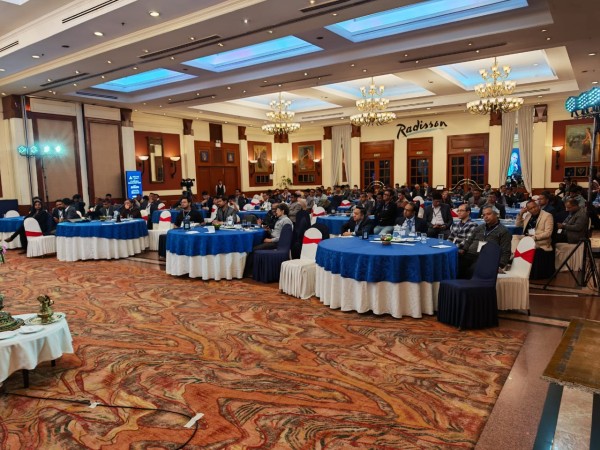
Nepal, 17th Apr 2026 – The 4th APAC IPv6 Council Meeting, organized by the APAC IPv6 Council and hosted by Subisu Limited, was successfully held on April 9–10, 2026, at the Radisson Hotel, Kathmandu, Nepal. The two-day international conference brought together policymakers, regulators, industry leaders, academia, and technical experts from over 18 countries to advance discussions on IPv6 adoption, AI-driven networks, and next-generation Internet infrastructure.
With over 300 participants attending across both days, the event highlighted the growing urgency of transitioning from legacy IPv4 systems to a scalable, secure, and future-ready IPv6 ecosystem.
Host Partner: Subisu Limited
The APAC IPv6 Council extends its sincere appreciation to Subisu Limited, the official host of the 4th Council Meeting. As one of Nepal’s leading Internet Service Providers, Subisu has played a pioneering role in advancing IPv6 deployment in the country, including early dual-stack implementation initiatives.
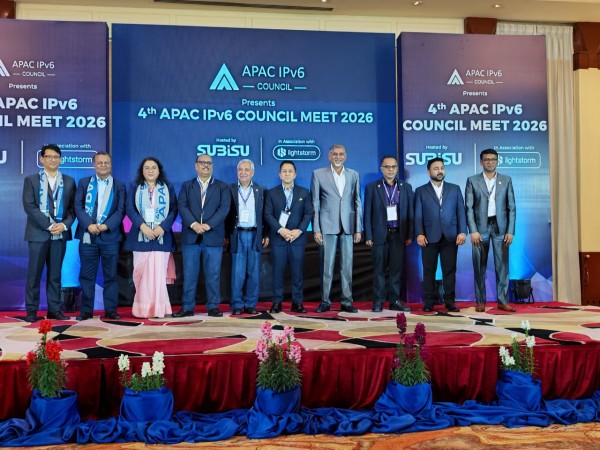
A key highlight of the event was the signing of a Memorandum of Understanding (MoU) between the APAC IPv6 Council and Subisu, strengthening long-term collaboration in technical capacity building, knowledge exchange, and national IPv6 deployment efforts.
Distinguished Speakers and Key Discussions
The conference featured an extensive lineup of regional and global experts addressing policy, technical, and ecosystem-level challenges and opportunities:
- Mr. Binaya Mohan Saud, CEO, Subisu Limited
Delivered the inaugural address, emphasizing IPv6 as a socioeconomic necessity to support Nepal’s growing digital and AI-driven ecosystem. - Prof. Emeritus Dr. Sureswaran Ramadass, Chairman, APAC IPv6 Council
Presented global IPv6 trends, AI traffic projections, and the economic imperative of transitioning to IPv6. - Mr. Aadesh Khadka, Joint Secretary, Ministry of Communication and Information Technology (MoCIT), Nepal
Highlighted national policy direction and the role of IPv6 in achieving Nepal’s Digital Nepal vision. - Mr. Min Prasad Aryal, Director, Nepal Telecommunications Authority (NTA)
Outlined regulatory priorities and Nepal’s progress in IPv6 adoption, including its strong regional ranking. - Mr. Deepak Rauniyar, Founder & CEO, Oorja World Inc.
Explored Nepal’s potential as a global hub for AI data centres powered by renewable energy. - Mr. Muhammad Arif Angga, Chairman, APJII (Indonesia)
Shared regional deployment challenges and emphasized regulatory mandates to accelerate IPv6 adoption. - Mr. Teguh Prasetya, APAC IPv6 Council Indonesia
Delivered a technical deep dive on IPv6 security risks and mitigation strategies including NDP protection mechanisms. - Dr. Baburam Dawadi, Tribhuvan University
Discussed future networking technologies, including quantum networks, AI-driven architectures, and SDN integration. - Mr. Ram Krishna Pariyar, VP, Subisu Limited
Highlighted operational challenges, cost implications of IPv4 reliance, and Nepal’s roadmap toward IPv6 sovereignty by 2028. - Mr. Krishna Basudevan, Head of Global Enterprise Architecture, Lightstorm
Presented enterprise infrastructure strategies using IPv6 and SRv6 for AI-ready networks and high-capacity data centres. - Dr. Navaneethan C. Arjuman, APAN IPv6 & 5G Working Group Chair
Provided a national transition framework and moderated discussions on security and resilience. - Mr. Krishna Kumar Lahoti, Director, CNLabs
Explained global IPv6 testing standards, certification processes, and interoperability requirements. - Mr. Champika Wijayatunga, ICANN
Addressed DNSSEC implementation and the need for securing domain infrastructure alongside IPv6 adoption. - Mr. Bikram Shrestha, Sanima Bank
Discussed challenges in IPv6 adoption within the financial sector and the need for regulatory mandates. - Prof. Dr. Latif Ladid, President, IPv6 Forum
Presented the future vision of an IPv6-enabled “two-way Internet” essential for AI-driven ecosystems. - Mr. Suvash Khadka, CEO, ISPAN
Moderated high-level discussions on bridging the gap between infrastructure readiness and policy implementation.
Additional ecosystem presentations highlighted contributions from NPIX, NREN, ICT Foundation Nepal, and regional IPv6 initiatives, reinforcing the importance of multi-stakeholder collaboration.
High-Level Panel Discussions
The conference featured two high-impact panel discussions that brought together policymakers, industry leaders, and technical experts to address critical challenges in IPv6 adoption and Internet resilience.
Panel 1: Internet Security, Resilience, and the IPv6 Transition
Moderated by Dr. Navaneethan C. Arjuman (APAN IPv6 & 5G Working Group Chair), this panel focused on aligning industry deployment with government policy and security frameworks.
Panelists including Mr. Sudhir Parajuli (ISPAN), Mr. Aadesh Khadka (MoCIT), Ms. Roja Kiran Basukala (NTA), and Dr. Satya N. Gupta (ITU-APT Foundation of India) emphasized the urgent need to move beyond legacy IPv4 systems, reduce reliance on CGNAT, and address emerging risks such as dual-stack vulnerabilities and future quantum threats.
The discussion concluded with a strong consensus that national Internet resilience depends on synchronized efforts between regulators and service providers, supported by clear policy direction and technical capacity building.
Panel 2: Digital Infrastructure and Internet Ecosystem Development
Moderated by Mr. Suvash Khadka (CEO, ISPAN), this panel examined the gap between rapid infrastructure deployment by the private sector and the slower pace of policy and regulatory frameworks.
Panelists including Dr. Navaneethan C. Arjuman, Mr. Bhoj Raj Ghimire (Nepal Open University / NAST), Ms. Lena Kansakar (Ncell), and Mr. Binaya Bohara (ISPAN Advisor) discussed challenges related to institutional readiness, talent shortages, and the need for stronger academia-industry collaboration.
The panel highlighted that while infrastructure readiness is advancing, the key bottlenecks lie in policy alignment, workforce development, and ecosystem coordination.
Government Engagement and Strategic Outcomes
The Council held high-level engagements with key government stakeholders:
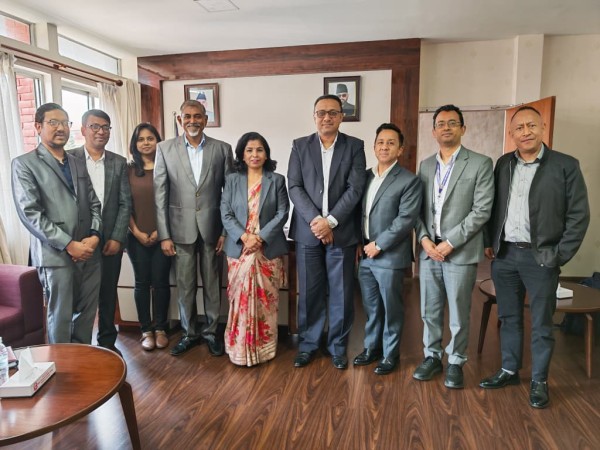
- Nepal Telecommunications Authority (NTA) – the national telecommunications regulator, which expressed strong commitment to IPv6 adoption and requested support from the APAC IPv6 Council.
- Ministry of Communication and Information Technology (MoCIT), Nepal – the central government body responsible for ICT policy, which welcomed collaboration to strengthen Nepal’s digital infrastructure.
The event concluded with closing remarks from Mr. Bhupendra Bhandari, Chairman of the Nepal Telecommunications Authority, reaffirming Nepal’s commitment to IPv6 as a critical enabler of national connectivity and digital transformation.
Fellowship Program and Regional Participation
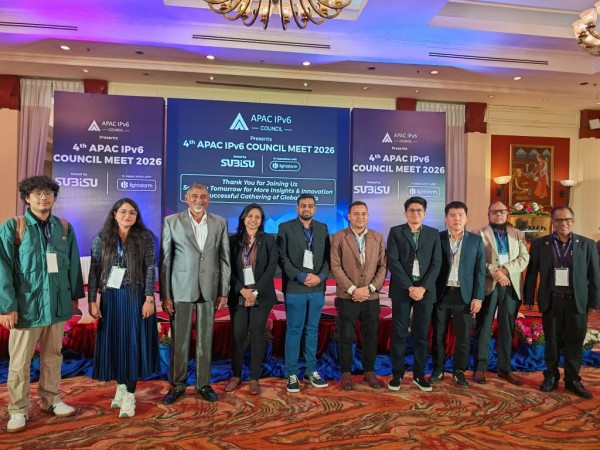
The APAC IPv6 Council Fellowship Program enabled participation from emerging leaders across Laos, Sri Lanka, Bangladesh, India, and Nepal, supporting regional knowledge exchange and capacity building.
The fellowship program was supported by:
- Dr. Latif Ladid – IPv6 Forum
- Prof. Emeritus Dr. Sureswaran Ramadass – APAC IPv6 Council
- University Sains Malaysia (USM)
- Asia Pacific Advanced Network (APAN)
Strategic Vision: Toward a Native IPv6 Future
The conference culminated in a shared regional vision, including a roadmap toward achieving a fully sovereign, secure, and native IPv6 ecosystem by 2028, supported by policy alignment, industry collaboration, and large-scale capacity building.
About APAC IPv6 Council
The APAC IPv6 Council is a regional platform dedicated to promoting IPv6 adoption and next-generation Internet technologies across the Asia-Pacific region through collaboration, capacity building, and policy engagement.
Company Details
Organization: APAC IPv6 Council
Contact Person: Ms. Valli
Website: https://apacv6.org/
Email: Send Email
Country: Nepal
Release Id: 17042644115