
Why Engineering Ceramics Are Replacing Metal in Precision Devices Today

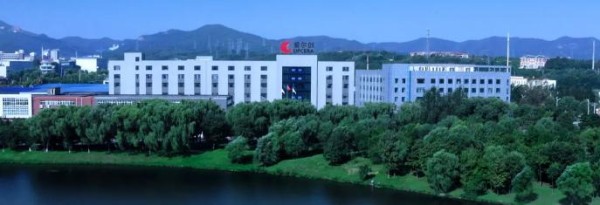
China, 8th Dec 2025 – Metal has powered industry for a century. Yet many precision devices now move beyond it. The reason is simple: performance ceilings. Heat, wear, corrosion, and signal loss all push metal to its limits. Tight tolerances also stretch machining costs and lead times. Markets need lighter parts, cooler systems, and cleaner signals. They need better stability at micro-scale. This is where Engineering Ceramics step in. China UPCERA focuses on exactly this gap. Founded in Shenzhen in 2003, UPCERA has grown with an R&D-driven model and modern bases in Shenzhen and Benxi. The company now operates as a wholly owned subsidiary of Sinocera and supports customers in more than 100 countries. Its mission is simple: build Precision Ceramic Components that solve real production pain.
The Pain Points Metals Can’t Shake
Modern devices run hotter and faster. Power modules, 5G radios, laser diodes, and AI data centers all raise the bar. Metals bring four hard limits.
1)Thermal mismatch. Metals expand more than silicon. That shift breaks solder joints and distorts optics.
2)Electrical loss. Metals conduct heat, but also conduct current. That adds parasitic loss and noise in RF paths.
3)Corrosion and wear. Harsh chemicals and abrasion eat metal surfaces. Lifespan drops, calibration drifts.
4)Weight and stiffness trade-offs. Reinforcing a metal part adds mass. That hurts speed, battery life, and precision.
5)These issues show up as downtime, yield loss, and expensive rework. They slow launches. They burn cash.
- Why Engineering Ceramics Win?
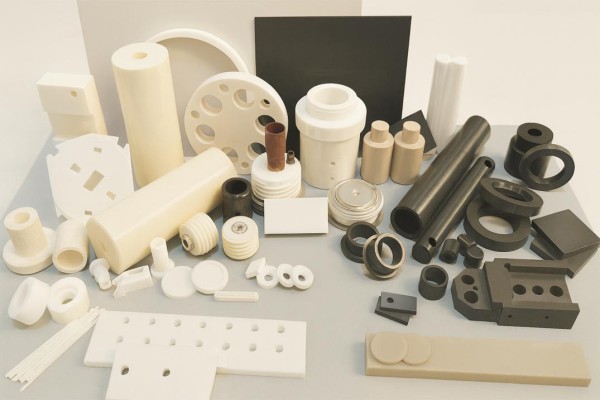
High Strength Ceramics offer a different toolkit. They are hard, stable, and clean. They resist heat, chemicals, and plasma. They insulate by default. Their coefficients of thermal expansion can match silicon. In precision optics, RF, semiconductors, aerospace, and medical, that mix is decisive.
• Aluminum nitride (AlN) moves heat fast while staying electrically insulating. It keeps IGBT modules and laser diodes cool without adding loss.
• Silicon nitride (Si₃N₄) keeps strength at extreme temperatures and survives thermal shock. Bearings and turbine parts last longer.
• High-purity alumina (Al₂O₃, up to 99.99%) provides ultra-low dielectric loss and zero-porosity surfaces for optics and vacuum systems.
• Zirconia brings toughness and fine finish for guides and sleeves in optical connectors.
• Sapphire and ruby deliver hardness for wear parts and windows in harsh media.
• Silicon carbide offers high stiffness and corrosion resistance for high-speed, high-precision stages.
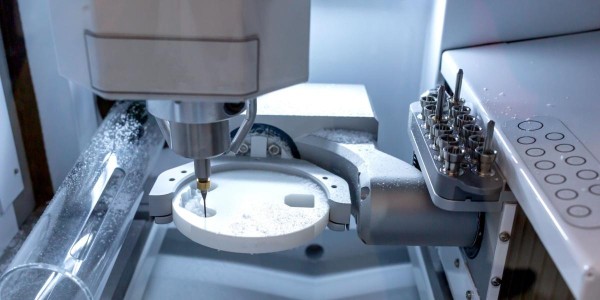
The result is stable geometry, cleaner signals, cooler junctions, and longer service life. Devices run tighter and last longer. Total cost of ownership drops.
From Concept to Part: Customization Matters
Switching to ceramics is not only a material change. It is a process change. Tighter tolerances call for careful design, sintering control, and finishing. This is where Custom Ceramic Machining makes or breaks a project. You need a partner who can match the material to the job, hold the tolerances, and scale.
What Sets UPCERA Apart
• Breadth of materials. UPCERA offers Custom Technical Ceramics across zirconia, alumina (including 99.99% grades), sapphire, ruby, aluminum nitride, silicon nitride, and silicon carbide. Each comes with data-driven guidance on thermal, electrical, and mechanical behavior.
• Design-to-production support. Teams engage early on geometry, tolerance, and assembly. That shortens development loops and reduces scrap.
• Full-chain capability. Backed by Sinocera’s powder and blanks, UPCERA controls the chain from material to precision ceramic components. That improves consistency and cuts lead-time risk.
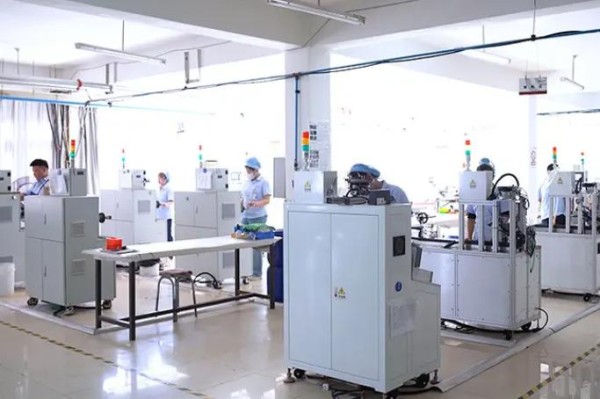
• Lean, scalable processes. Decades of high-volume sleeve and ferrule production sharpened their metrology, SPC, and yield playbook. Those controls now extend to complex, non-standard parts.
Proven in Demanding Fields
• Optical communications. UPCERA was the first in China to develop zirconia ceramic sleeves for optical connections. Today, sleeves and ferrules support optical modules, computing power centers, and data centers. Surface finish, roundness, and concentricity are tuned for low insertion loss and stable alignment.
• Semiconductors and power electronics. AlN substrates pull heat away while insulating. Silicon nitride parts survive plasma, rapid temperature swings, and corrosive gases. That improves uptime and die yield.
• Aerospace and mechanical systems. Silicon nitride bearings and wear parts stay strong at high speeds and high temperatures. Weight drops, life extends.
• Medical and analytical equipment. High-purity alumina and sapphire provide clean, non-magnetic, and biocompatible structures for imaging, pumps, and optics.
Solving the Four Big Ceramic Adoption Hurdles
1)”Ceramics crack during thermal cycling.”
UPCERA chooses the right base (e.g., silicon nitride for shock resistance) and tunes sintering to manage grain structure and residual stress. Parts pass rapid cycle tests before release.
2)”Tight tolerances are too costly.”
UPCERA uses advanced grinding, lapping, and polishing with in-line metrology. Lessons from mass-producing sleeves translate to micron-level capability on complex shapes. The outcome is high Cp/Cpk at scale.
3)”We need ceramic-metal assemblies.”
UPCERA supports metallization and bonding. Ceramic-to-metal interfaces stay strong across heat cycles. This enables mounts, housings, and fluid systems that blend insulation with structural strength.
4)”Lead times and iteration speed are slow.”
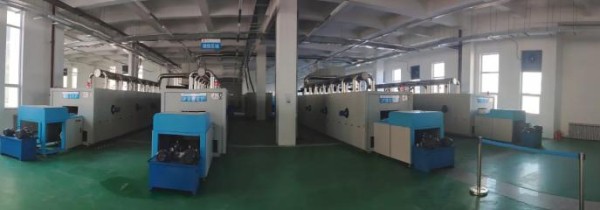
With the powder-to-parts chain in house, trials move faster. Process windows are well known. That shortens the loop from drawing to pilot to ramp.
Typical Custom Parts and Functions
• Bushings and nozzles for wear and corrosion resistance in fluid control.
• Metallized insulators with square through-holes for clean electrical isolation.
• Engraved, printed, or bonded assemblies for robust ceramic-metal structures.
• Special-shaped parts cut to non-standard geometries for tight envelopes and novel mechanisms.
• Each part balances stiffness, toughness, dielectric behavior, and heat flow. Each targets a specific bottleneck in the device.
The Bottom Line for Precision Devices
Moving from metal to Engineering Ceramics is not a trend story. It is a performance story. As power densities rise and features shrink, the winners will run cooler, cleaner, and longer. Custom Ceramic Machining and Custom Technical Ceramics make that possible. High Strength Ceramics preserve accuracy when metal would creep or corrode. Precision Ceramic Components keep signals clean and optics aligned.
UPCERA brings the materials, the processes, and the scale to make this shift practical. If your roadmap calls for higher reliability, tighter tolerance, or better thermal management, ceramics are ready. And with UPCERA’s integrated chain, you can adopt them with confidence – on time, at scale, and with measurable gains.
Contact:
gtsw@upcera.com / luo.fz@upcera.com
+86 0755-86008635 / +86 15572499372
5F, Block B, Tsinghua Information Port, No.1 Songpingshan New East Road, Xili Street, Nanshan District, Shenzhen, Guangdong, China
Company Details
Organization: UPCERA
Contact Person: UPCERA
Website: https://www.proupcera.com/
Email: Send Email
Contact Number: +8615572499372
Address: 5F, Block B, Tsinghua Information Port, No.1 Songpingshan New East Road, Xili Street, Nanshan District, Shenzhen, Guangdong, China
Country: China
Release Id: 08122538672