
Magnetic Anastomosis: A New Era in Surgical Connection and Healing

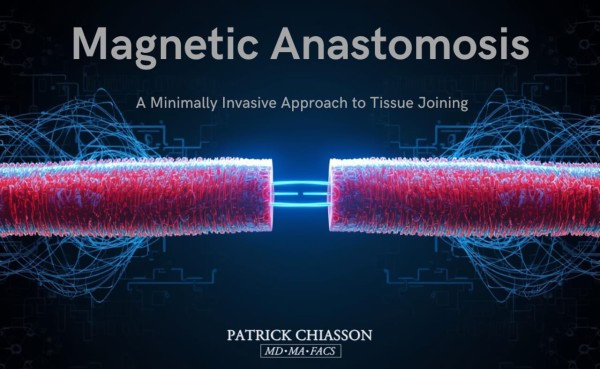
United States, 26th Dec 2025 – Advances in minimally invasive surgery continue to transform how complex procedures are performed, and one of the most promising developments is magnetic anastomosis. Traditionally, surgeons create an anastomosis—an internal connection between two hollow structures such as segments of the gastrointestinal tract—using sutures or staples. While effective, these methods can be technically demanding and carry risks such as leakage, scarring, inflammation, and prolonged recovery.
Magnetic anastomosis introduces a modern, non-suture approach that relies on controlled magnetic force to connect tissues safely and efficiently. Recently approved by the FDA for use in gastrointestinal procedures, this technique is gaining attention for its ability to simplify reconstruction while supporting more natural healing.
Understanding Magnetic Anastomosis
Magnetic anastomosis uses specially designed magnetic devices that are placed on opposing sides of the tissues that need to be joined. Once positioned, the magnets attract each other, gently compressing the tissue between them. This sustained, even pressure initiates a controlled biological process that results in tissue fusion and the formation of a functional connection.
As healing progresses, the compressed tissue remodels naturally, forming a smooth and patent anastomosis. Depending on the system used, the magnets either pass through the gastrointestinal tract on their own or are removed endoscopically after the connection is complete. The procedure can be performed surgically, endoscopically, or through a hybrid technique, offering flexibility across different clinical scenarios.
Why This Technique Is Gaining Momentum
One of the most significant advantages of magnetic anastomosis is consistency. Unlike suturing, which depends heavily on surgical technique and tissue quality, magnetic systems apply uniform pressure across the connection site. This consistency promotes even healing and reduces the likelihood of weak points or irregular closure.
Another key benefit is a reduced risk of anastomotic leakage. Because tissues are held together under steady compression, the resulting seal is often more secure during the critical early healing phase. Additionally, the absence of penetrating sutures or staples minimizes trauma to surrounding tissue, which can translate to less inflammation and faster recovery.
Magnetic anastomosis can also shorten operative time. By streamlining the process of creating a connection, surgeons may be able to reduce time spent in the operating room, lowering anesthesia exposure and improving overall efficiency.
Clinical Uses in Gastrointestinal Care
In gastrointestinal surgery, magnetic anastomosis has demonstrated success in a variety of applications. These include creating connections within the esophagus or intestines, addressing strictures, and managing complex complications such as leaks or fistulas. Some advanced systems allow surgeons to form new connections endoscopically, eliminating the need for abdominal incisions altogether.
This minimally invasive capability makes the technique especially attractive in patients who may not be ideal candidates for traditional open or laparoscopic reconstruction.
Advantages Compared to Conventional Methods
Magnetic anastomosis offers several advantages over traditional sutured or stapled techniques. Because there is no direct penetration of tissue, the risk of localized trauma is reduced. The circular, evenly distributed healing pattern may also lower the chance of postoperative narrowing at the connection site. In anatomically challenging areas, magnetic systems can simplify procedures that would otherwise be complex or high risk.
These benefits are particularly valuable in cases involving fragile tissue, limited surgical access, or patients who have undergone multiple prior procedures.
Limitations and Ongoing Development
Despite its promise, magnetic anastomosis is not universally applicable. Successful outcomes depend on selecting the appropriate magnet size and force, and certain tissue conditions—such as severe fibrosis or prior radiation exposure—may limit effectiveness. The technique also requires specialized equipment and training, and long-term outcome data is still evolving in some areas of use.
Ongoing research and clinical trials continue to expand understanding of where and how magnetic anastomosis can be used most effectively.
Looking Ahead
Magnetic anastomosis represents a meaningful shift toward safer, less invasive, and more predictable surgical reconstruction. As technology advances, its applications are likely to expand, offering new solutions for conditions that once required extensive surgery.
For patients, this innovation may mean shorter recovery times, fewer complications, and improved long-term outcomes. For surgeons, it provides a powerful tool that blends engineering precision with the body’s natural healing processes—signaling an exciting future for anastomotic surgery.
Tucson Bariatric Surgeon, Dr. Patrick Chiasson, specializes in minimally invasive Weight Loss Surgery (Endoscopic and Laparoscopic). His procedures include Magnetic Anastomosis, Heartburn, and Hiatal Hernia / LINX procedures.
This article is for general purposes only and should not be considered medical advice. If you have any medical issues or questions, consult your physician.
Company Details
Organization: Dr. Patrick Chiasson, Tucson Bariatric Surgeon
Contact Person: Office Manager
Website: https://patrickchiassonmd.com/magnetic-anastomosis-surgeon-tucson-az/
Email: Send Email
Country: United States
Release Id: 26122539596