
Holiday Loneliness – A Public Health Crisis Unpacked by Dr. Zoe Wyatt-Potage

Dr. Zoe Wyatt-Potage unpacks holiday loneliness as a nervous system issue and shows how small, genuine connections can protect our health.
United States, 9th Dec 2025 – In the United States, the holidays are often sold as a season of warmth, gatherings and gratitude. Yet surveys suggest that around 55 per cent of Americans feel more lonely at this time of year, with younger adults and single people most affected. The U.S. Surgeon General has warned that about half of American adults report significant loneliness, describing social disconnection as a public health crisis.
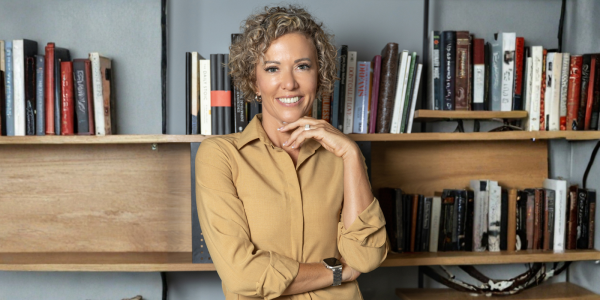
“Public conversation still treats holiday loneliness as a minor emotional issue,” says Dr Zoe Wyatt-Potage, an Australian Clinical Social Worker and researcher who works with organisations and clients globally. “The data place it firmly in the territory of health, not just mood.”
A widening gap between image and reality
Researchers emphasise that loneliness is not the same as simply being alone. Social isolation describes the number of people someone sees or talks to. Loneliness is the distressing feeling of disconnection, even in a room full of others. Recent reviews in medical and psychological journals highlight that both loneliness and isolation are linked with poorer mental and physical health outcomes.
This burden of loneliness often falls heaviest on people facing financial strain, discrimination or intensive caregiving responsibilities. The holidays magnify this. Expectations of perfect family gatherings and generous gifts collide with rising living costs. Grief, estrangement and distance mean many people are navigating complex family stories while social media offers an endless stream of images that imply everyone else is managing something better.
“For some, it is the empty chair at the table,” Dr Zoe says. “For others, it is the sense of being unknown in a crowded room.”
A nervous system built for connection
From a neuroscience perspective, humans have nervous systems that are tuned to cues of safety and danger in their social environment. When relationships feel reliable and supportive, stress responses are more likely to rise and fall as needed. When connection feels chronically scarce, threat pathways stay switched on. Stress hormones remain elevated, sleep quality deteriorates and it becomes harder to regulate emotion and attention.
Dr Zoe’s work on trauma and resilience points to the same conclusion. Stable, trusting relationships act as a buffer, even when life circumstances are hard. “Across very different settings, the pattern repeats,” she says. “People do not have to be surrounded by dozens of friends. They do need a small number of relationships where they feel safe, respected and remembered.”
What this means for the holidays
Holiday loneliness has often been framed as a private problem to solve quietly. Dr Zoe’s clinical experience and the newer data point in a different direction. If loneliness functions as a health issue with social causes, then part of the solution must sit with workplaces and communities, not only with individuals trying to think differently.
In organisational settings, her trauma-informed leadership work calls for managers to pay attention to how end-of-year workloads, scheduling and messaging affect staff who may already be stretched thin. She recommends avoiding language that glorifies exhaustion, offering flexibility where possible and making clear that it is acceptable to set boundaries around work events and after-hours contact. “Leaders do not need to fix people’s private lives,” she notes. “They do need to avoid adding unnecessary strain to an already sensitive time of year.”
Small, realistic steps for individuals
For people feeling the weight of isolation, Dr Zoe and many other clinicians caution against grand resolutions or attempts to rebuild an entire social life in a fortnight. Dr Zoe instead recommends treating connection as a health behaviour that can be built gradually, like movement or sleep: identifying one or two emotionally safe people and scheduling a regular point of contact, even if it is only a short call or walk each week.
Planning ahead for difficult days with a simple structure that includes some physical movement, one genuinely nourishing activity and one sensory comfort can reduce the urge to withdraw. Curating social media use, by muting feeds that trigger comparison and choosing a smaller set of grounding or humorous accounts, is another way to reduce pressure at an already loaded time of year.
Persistent low mood, loss of interest in usual activities, major changes in sleep or appetite or thoughts of self-harm are all signs that professional support may be needed. Many mental health providers and crisis lines in the U.S. now offer text and online options for people who find it difficult to speak out loud about how they are feeling.
Reframing loneliness as a shared responsibility
For Dr Zoe, the key message is that holiday loneliness is not a seasonal quirk or a sign of poor emotional management. It is a predictable strain on a nervous system built for connection, occurring within a culture that often underestimates how much that connection matters.
“The people who feel most alone in December are rarely lacking in effort or goodwill,” she says. “They are often carrying heavy histories, finances or caring roles in environments that do not see the full story. If different outcomes are the goal, workplaces and communities need to make it easier for connection to happen in small, sustainable ways all year, not only in one crowded week in December.”
Social connection, she argues, is not a luxury or an optional extra. It is a vital part of health, and a resource that families, workplaces and policymakers can choose to protect.
For more information, visit her website or follow Dr Zoe on social media for practical, science-informed ways to support your nervous system, protect your attention and build steadier connections throughout the year.
Links
Dr. Zoe Wyatt on Instagram
Dr. Zoe Wyatt on LinkedIn
Dr. Zoe Wyatt on Facebook
Dr. Zoe Wyatt on ResearchGate
Media Contact
Dr Zoe Wyatt-Potage
Clinical Consultant
Email: zoe@drzoewyatt.com
Website
Company Details
Organization: Dr Zoe Wyatt-Potage
Contact Person: Dr Zoe Wyatt-Potage
Website: https://www.researchgate.net/profile/Zoe-Wyatt
Email: Send Email
Country: United States
Release Id: 09122538749
Disclaimer: This press release is for informational purposes only and is not intended as medical advice. Readers should consult a qualified healthcare professional for personal medical guidance