
How to Choose the Right Industrial UPS System

Choosing the wrong industrial UPS system means risking equipment damage, production downtime, and compromised safety. This guide cuts through the complexity: from calculating your true power capacity needs and selecting between online double conversion versus modular architectures, to evaluating real efficiency savings of 15-20% on total cost of ownership and ensuring your system survives harsh industrial conditions with ±25% input voltage tolerance. Whether you run a manufacturing plant, data center, or healthcare facility, these six decision criteria will help you invest in a UPS that keeps your operations running — not just today, but for the decade ahead.
Baoding, Hebei, China, 9th Jul 2026 – When critical operations depend on continuous power, selecting the right Industrial UPS Systems becomes a decision that directly impacts business continuity, equipment safety, and operational costs. A power interruption in a manufacturing facility, data center, or healthcare environment can result in data loss, equipment damage, production downtime, and even safety hazards. According to the Uptime Institute’s 2024 Annual Outage Analysis, nearly 45% of data center outages cost more than $100,000 per incident, with some exceeding $1 million. This guide walks you through the essential factors to evaluate when choosing an industrial UPS system for your specific application.
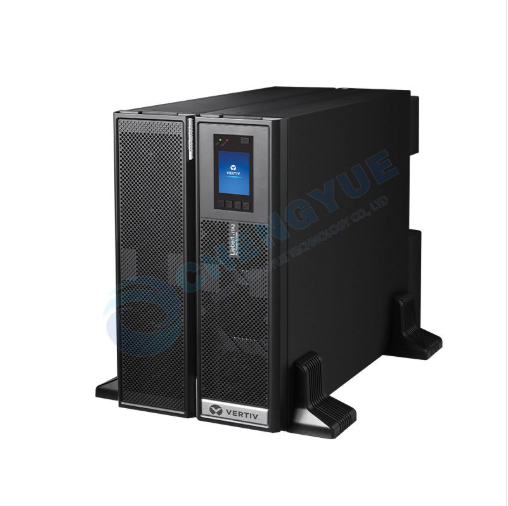
Assess Your Power Requirements
The first and most fundamental step is determining your actual power needs. Calculate the total load in kilowatts or kilovolt-amperes that your critical equipment demands. Consider both current requirements and future expansion plans. A small-to-medium server room typically requires 6 to 20kVA capacity, while large data centers often need systems ranging from 250kVA to over 1000kVA. Always factor in a 20 to 30 percent margin above your calculated load to accommodate growth and prevent the UPS from operating at maximum capacity, which reduces both efficiency and component lifespan over time.
Choose the Right UPS Topology
Industrial UPS systems come in several topologies, each suited to different environments. Online double conversion UPS provides the highest level of protection by continuously converting AC power to DC and then back to AC, completely isolating the load from utility power disturbances. This topology maintains voltage stability within ±1 percent and is essential for sensitive equipment in semiconductor manufacturing, financial institutions, and healthcare facilities, where even a momentary glitch can cause catastrophic results. For applications where absolute power conditioning is less critical but cost efficiency matters more, line-interactive or standby UPS types may suffice, though they offer noticeably less protection against power anomalies such as surges, sags, and frequency fluctuations.
Consider Modular vs. Traditional Designs
Modern modular UPS systems have revolutionized how organizations approach power protection. Modular designs allow hot-swappable power modules that can be replaced or added without shutting down the system, providing N+X redundancy and enabling capacity expansion as demand grows. The Vertiv Liebert APM250 series, for example, uses 50kW power modules that can scale from 50kVA to 500kVA within a single cabinet occupying just 0.6 square meters for the half-megawatt configuration. Its rectifier and inverter both employ three-level technology, achieving dual conversion efficiency of up to 97 percent, while the dynamic online mode can reach 99 percent efficiency without compromising reliability. This space-saving and scalable approach is particularly valuable for data center leasing and cloud computing services, where floor space directly correlates with revenue potential.
Evaluate Efficiency and Operating Costs
Energy efficiency is a critical long-term consideration. A UPS system with 95 percent efficiency versus one with 97 percent may seem like a minor difference, but over a 10-year operating period, that 2 percent gap translates into substantial electricity savings and reduced cooling demands. Industry estimates indicate that improving UPS efficiency from 93 percent to 97 percent can reduce the total cost of ownership by approximately 15 to 20 percent. Look for systems with ECO mode capabilities, which achieve up to 99 percent efficiency when grid power quality is acceptable, while automatically switching to full double conversion protection when disturbances are detected.
Input Voltage Range and Environmental Adaptability
Industrial environments often present challenging power conditions that demand robust input voltage tolerance. A power frequency online UPS with ultra-wide input voltage tolerance, such as 380VAC ±25 percent, can operate reliably in regions with unstable utility grids without frequently switching to battery mode, which extends battery service life and reduces component wear. Systems with built-in output isolation transformers further protect loads by reducing zero-to-ground voltage and mitigating the impact of load harmonic currents on the inverter. For harsh industrial settings with dust, heat, and vibration, select UPS units featuring redundant fan designs, enclosed air ducts, and circuit boards protected with conformal coating, as specified in IEC 62040 and EN 62040 safety standards.
Battery Management and Monitoring
The battery system is the heart of any UPS, and intelligent battery management significantly extends service life while preventing unexpected failures. Features such as temperature-compensated charging, automatic maintenance cycling, and real-time voltage and current monitoring ensure batteries remain in optimal condition throughout their rated lifespan, typically 3 to 5 years for VRLA batteries. Advanced UPS systems integrate comprehensive monitoring through color touch screens and remote management platforms compatible with third-party BMS and DCIM systems, providing real-time visibility into power status, load conditions, and battery health across your entire infrastructure.
Final Considerations
Before finalizing your selection, verify that the UPS manufacturer offers robust local support, spare parts availability, and comprehensive warranty coverage. Compliance with international safety standards, including IEC 62040-3 and EN 62040-3, ensures the system meets recognized performance and safety benchmarks. By carefully evaluating your power requirements, selecting the appropriate topology, prioritizing efficiency and scalability, and choosing a reliable supplier with proven industry experience, you can secure an industrial UPS solution that protects your critical operations for years to come.
Company Details
Organization: Hebei Chengyue Technology Co., Ltd
Contact Person: Linda
Website: https://www.hbcytech.com/
Email: Send Email
Contact Number: +8618333101700
Address: 3rd Floor, Ruike Instrument, No. 508 Tianning Road, Lianchi District,
City: Baoding
State: Hebei
Country: China
Release Id: 09072646945