
The Impact of Market Volatility on Modern Trading Strategies by Cody Burgat

Cody Burgat Highlights How Changing Economic Conditions Are Shaping Decision-Making Across Global Financial Markets
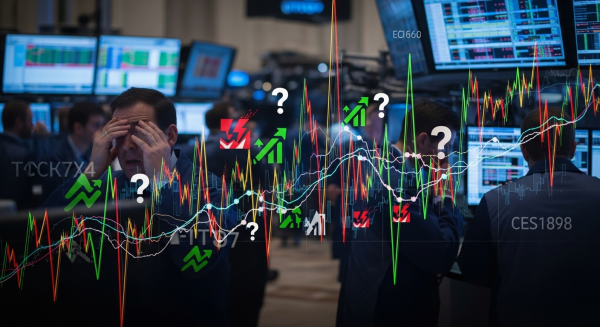
As global financial markets continue to react to shifting economic conditions, volatility has become a defining feature across asset classes. From currency fluctuations to changing interest rate policies, market participants are navigating an environment where uncertainty is no longer occasional but constant.
Cody Burgat, a market analyst and investor focused on structured trading approaches, says this evolving landscape is influencing how traders approach decision-making and risk management.
“Volatility isn’t something that comes and goes anymore, it’s part of the environment,” Burgat said. “The challenge is not avoiding it, but learning how to operate within it.”
Cody Burgat explains that many traders enter the market expecting stable conditions, only to encounter rapid price movements driven by macroeconomic events. Central bank decisions, inflation data and geopolitical developments can all contribute to sudden shifts, making it difficult to rely on static strategies.
In this context, Burgat emphasizes the importance of adaptability. Rather than relying on fixed expectations, traders are increasingly required to adjust their approach based on changing conditions. This includes reassessing risk exposure, refining position sizing and maintaining flexibility in execution.
“Markets don’t move in straight lines,” he said. “Strategies need to account for different scenarios, not just ideal conditions.”
The growing complexity of global markets has also contributed to increased participation from both retail and institutional traders. While access to information and trading platforms has improved, Burgat notes that understanding how to interpret market signals remains a critical challenge.
Cody Burgat points out that volatility often amplifies emotional decision-making, particularly for less experienced participants. Rapid price movements can lead to impulsive actions, which may undermine otherwise sound strategies.
“Emotional responses tend to increase when uncertainty rises,” Burgat said. “That’s why having a structured process becomes even more important during volatile periods.”
In addition to behavioral factors, Burgat highlights the role of macroeconomic awareness in navigating modern markets. Understanding how broader economic trends influence asset prices can help traders make more informed decisions and avoid overreacting to short-term fluctuations.
As part of this approach, Cody Burgat advocates for maintaining consistency in risk management regardless of market conditions. While volatility may present opportunities, it also increases exposure to unexpected outcomes.
“Risk doesn’t disappear in volatile markets, it often increases,” he said. “Managing that risk consistently is what allows traders to stay in the game over time.”
Industry observers note that volatility is likely to remain a persistent feature of financial markets as global economies continue to evolve. In response, traders are placing greater emphasis on resilience, adaptability and disciplined execution.
Burgat believes that this shift represents a broader change in how market participants approach trading. Rather than focusing solely on short-term gains, there is a growing recognition of the importance of long-term sustainability.
“Markets will always be uncertain,” he said. “The goal is to build an approach that can handle that uncertainty without breaking down.”
Company Details
Organization: 4most LLC
Contact Person: Simon Lemelin
Website: https://4mostllc.com/
Email: office@trendingmoney.org
Country: United States
Release Id: 03042643582