
Cody Burgat Explains Why Artificial Intelligence Does Not Eliminate Risk in Trading

Cody Burgat Highlights the Limits of AI in Financial Markets as Traders Seek More Structured, Risk-Aware Approaches
United States, 27th Mar 2026 – In recent years, artificial intelligence has become increasingly integrated into financial markets, with many traders and platforms adopting automated systems to analyze data, execute trades and identify potential opportunities. While this technological shift has improved efficiency and access to information, it has also led to a growing misconception that AI can remove or significantly reduce risk in trading.
Cody Burgat, a market analyst and algorithmic trader focused on structured decision-making in financial markets, says this assumption is not only inaccurate but potentially harmful for individuals entering the space without a clear understanding of market dynamics.
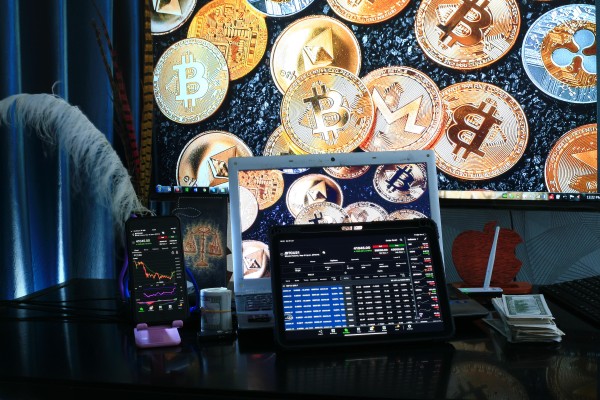
“Artificial intelligence can process large amounts of data faster than any human, but it does not eliminate uncertainty,” Burgat said. “Markets are driven by a combination of economic factors, human behavior and unforeseen global events. No system, no matter how advanced, can fully account for all of those variables.”
As more retail participants enter the forex and broader financial markets, the appeal of automation has grown. Many are drawn to AI-driven tools with the expectation that technology can simplify trading outcomes or provide a level of predictability. However, industry observers note that reliance on automation without foundational knowledge often leads to inconsistent results.
Burgat emphasizes that risk is a permanent feature of financial markets, not a flaw that can be engineered away. He points to the importance of understanding probability, position sizing and long-term consistency rather than focusing solely on predictive tools.
“Trading is not about eliminating risk, it’s about managing it,” he said. “When people approach the markets with the mindset that a system will do all the work, they overlook the importance of discipline, strategy and decision-making.”
The increasing use of algorithmic systems has also introduced new layers of complexity. While these systems can identify patterns and execute trades at speed, they remain dependent on historical data and predefined logic. Sudden market shifts, geopolitical developments or unexpected economic data releases can quickly invalidate assumptions built into automated strategies.
According to Burgat, this is where a structured approach becomes essential. Rather than relying entirely on automation, traders benefit from combining technological tools with a clear framework that accounts for uncertainty and risk exposure.
“Technology should be seen as a tool, not a replacement for understanding,” he said. “The most sustainable approach comes from combining data with a disciplined process that can adapt to changing market conditions.”
As discussions around artificial intelligence continue to shape the future of finance, Burgat believes the focus should shift toward education and realistic expectations. For both new and experienced traders, the ability to navigate uncertainty remains a defining factor in long-term performance.
Financial markets continue to evolve alongside advancements in technology, but the underlying principles of risk, probability and human behavior remain unchanged. Burgat notes that recognizing these fundamentals is key to building a more informed and resilient approach to trading in an increasingly automated environment.
Company Details
Organization: FinanceAndMarkets
Contact Person: Cody Burgat
Website: https://financeandmarkets.com/
Email: Send Email
Country: United States
Release Id: 27032643049
Disclaimer: This content is provided for general informational purposes only and does not constitute financial, investment, or trading advice. The views expressed are intended to promote awareness and discussion and should not be relied upon for making financial decisions. Readers are responsible for conducting their own research and assessment.