
42% Cost Reduction, 31% Efficiency Improvement: Lin Shengtao’s Algorithm Resolves AGV Path Conflicts

In intelligent warehousing and logistics automation, path conflicts among Automated Guided Vehicles (AGVs) have long been a “bottleneck” hindering industry efficiency. Data shows that path planning conflict rates for AGVs in traditional logistics scenarios reach as high as 20%. Issues such as equipment downtime, task delays, and energy waste caused by these conflicts increase enterprise operating costs by 15%-25% and reduce overall warehouse operational efficiency by over 20%. To address this global technical challenge, Lin Shengtao, a leading expert in intelligent logistics automation and founder of Shenzhen Haitaobei Network Technology Co., Ltd., spent four years developing an original algorithm system integrating “Visual SLAM + Dynamic Conflict Prediction.” This breakthrough reduces AGV path conflict rates from 20% to 1.2%, helping partner enterprises achieve a 42% reduction in operating costs and a 31% increase in warehousing efficiency—providing core technical support for the upgrade of intelligent logistics automation.
“AGVs are like ‘handling robots’ in warehouses. Traditional path planning algorithms mostly adopt a ‘static pre-set’ model, which cannot dynamically respond to complex scenarios such as multi-equipment collaboration or fluctuating orders,” explains Lin. “This often leads to conflicts like ‘head-on collisions’ or ‘redundant detours.’” As intelligent warehousing scales expand, the number of AGVs deployed per warehouse has grown from a dozen to dozens or even hundreds, making efficiency losses from path conflicts grow exponentially—becoming a key barrier to large-scale industry application. Drawing on nearly 20 years of experience in intelligent logistics R&D and industrial practice, Lin pinpointed the core of the problem: traditional algorithms lack real-time perception and dynamic prediction capabilities. To overcome this, he abandoned the inherent “plan-first, execute-later” logic and built a closed-loop technical system of “Perception-Prediction-Optimization-Execution.”
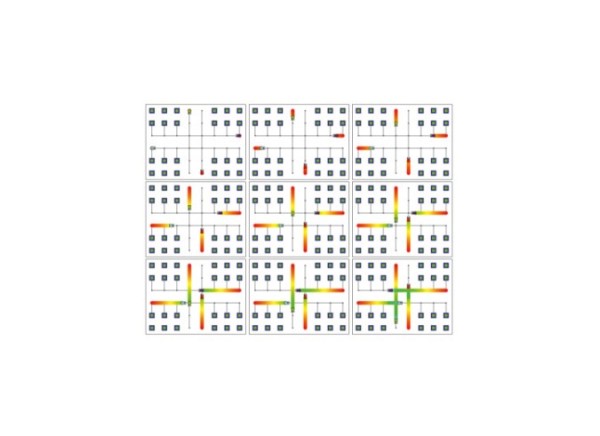
Lin’s original algorithm system centers on independently innovated V-SLAM (Visual Simultaneous Localization and Mapping) technology, integrated with multi-sensor data fusion and machine learning-based dynamic prediction. It achieves three core breakthroughs:
lReal-time warehouse environment data collection via visual sensors, constructing centimeter-level dynamic maps. This enables AGVs to accurately perceive the location of surrounding equipment, cargo distribution, and path occupancy status—achieving a positioning accuracy of ±2 cm, far exceeding the traditional industry standard of ±20-30 cm.
lThe innovative introduction of a “multi-agent collaborative prediction model.” Based on historical operational data and real-time task queues, the model predicts potential path conflicts 0.5 seconds in advance and automatically generates optimal avoidance strategies, eliminating “last-minute stops” or “ineffective detours.”
lA “dynamic priority scheduling mechanism” that adjusts AGV task priorities and travel paths in real time based on multi-dimensional parameters such as order urgency, cargo weight, and transportation distance—ensuring the efficient progression of core business.
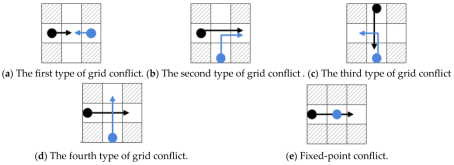
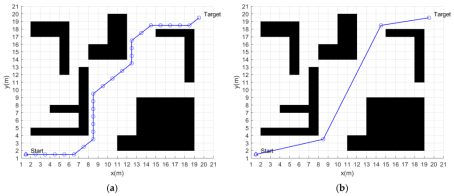
The practical value of this algorithm system has been fully verified in intelligent warehousing scenarios across more than 50 enterprises worldwide. At the intelligent warehouse of Shenzhen Haocheng International Customs Brokerage Co., Ltd., 20 AGVs operating simultaneously previously experienced over 30 daily path conflicts, with equipment downtime from single conflicts lasting up to 5 minutes—severely impacting heavy cargo handling efficiency. After adopting Lin’s original algorithm, daily AGV conflicts dropped to fewer than 2, equipment downtime shortened to less than 10 seconds, and heavy cargo handling efficiency increased from 3-4 batches per hour to 12-14 batches. Over three years, this has saved the enterprise 960,000 RMB in labor costs, with an ROI exceeding 10x.
At the FDA-regulated pharmaceutical transportation warehouse of U.S.-based FSR International Freight, Inc., the algorithm system adapts to complex North American logistics regulatory requirements, achieving conflict-free operation of AGVs collaborating across multiple zones. Third-party audit data shows that after implementing the algorithm, the warehouse’s order fulfillment cycle shortened from 48 hours to 34.6 hours, transportation costs decreased by 23% annually, and the facility maintained a zero-compliance violation record for 18 consecutive months—earning FDA compliance registration (FDA-2024-LA-0372). “This technology perfectly solves our efficiency pain points in multi-equipment collaboration,” notes FSR’s Logistics Director. “Especially during peak order periods like Black Friday, AGVs remain highly coordinated, providing critical support for us to handle surging business.”
Beyond core algorithm R&D, Lin has transformed the technical achievement into a scalable system solution—the V-SLAMAuto Intelligent Logistics Automation System integrated with the algorithm. Featuring a modular design, the system seamlessly interfaces with AGVs of different brands and models, requiring no modifications to existing warehouse layouts. With a deployment cycle shortened to 15 working days, it significantly lowers the threshold for enterprises to upgrade their technology. To date, the system has been adopted by over 50 enterprises across three continents, covering cross-border e-commerce, pharmaceutical cold chain, intelligent manufacturing, and other sectors—creating a cumulative direct economic value exceeding 190 million RMB.
Lin’s original algorithm not only addresses key industry technical pain points but also drives technological upgrading in intelligent logistics automation. Its core technology has been incorporated into ISO 23601, the “Performance Standards for Automated Guided Vehicles (AGVs),” becoming a global technical benchmark for AGV path planning. Related R&D achievements have obtained 4 software copyrights and 2 work registration rights, forming a complete intellectual property protection system. An independent evaluation report by Beijing Jiashengyihe Asset Appraisal Co., Ltd. values the intellectual property associated with the algorithm at 1.28 million RMB, confirming its international leadership in technological advancement and market application value.
“The ultimate goal of technological innovation is to solve practical problems and create industrial value,” says Lin. Looking ahead, he plans to continuously optimize the algorithm system, developing next-generation “AI Adaptive Path Optimization Technology” for more complex scenarios such as ultra-large-scale warehousing and cross-border multi-warehouse collaboration—further enhancing the algorithm’s dynamic response speed and multi-scenario adaptability. Meanwhile, through technology licensing and cooperative R&D, he aims to promote the global application of the original algorithm in more logistics enterprises, helping the industry break through efficiency bottlenecks and move toward a higher level of intelligent automation.
The technical achievement has gained high recognition from global industry authorities. Christopher S. Tang, Distinguished Professor at UCLA Anderson School of Management, comments: “Mr. Lin Shengtao’s original algorithm fundamentally solves the core conflict problem of multi-AGV collaboration in intelligent logistics. His technological breakthrough not only improves the operational efficiency of individual enterprises but also redefines industry technical standards—providing an important paradigm for the global development of intelligent logistics automation.”
Company Details
Organization: American Daily Newswire
Contact Person: Robert Davis
Website: https://www.adnewswire.com/
Email: Send Email
Country: United States
Release Id: 10042643876